Peak-season shipping surcharges are now in effect, bringing additional costs for businesses shipping with UPS and FedEx. With further increases scheduled during the busiest holiday weeks, understanding these charges is essential for managing transportation expenses.
Both carriers have announced seasonal demand surcharges affecting certain residential deliveries, oversized packages, and shipments requiring additional handling. However, the actual impact on shipping costs depends on service levels, package characteristics, shipment volume, and carrier agreements.
For shippers, the challenge isn’t just understanding which surcharges are increasing. It’s knowing whether those charges are being applied correctly and how they’re affecting overall transportation spend. Having visibility into parcel shipping expenses can help businesses identify discrepancies and better manage costs throughout peak season.
What Are the 2026 UPS and FedEx Peak Season Surcharges?
Peak-season surcharges, also called demand surcharges, are additional fees carriers apply during periods of increased shipping demand.
UPS has published updated demand surcharge information for certain domestic shipments, with charges effective beginning September 27, 2026. Shippers should review the applicable rates and conditions to understand how these charges affect their shipping profiles.
FedEx introduced several demand surcharges beginning September 28, 2026, with additional charges taking effect October 26. Many of these fees increase during the November 23–December 27 holiday shipping period.
According to FedEx’s published schedule, examples include:
| FedEx surcharge | Oct. 26–Nov. 22 | Nov. 23–Dec. 27 |
|---|---|---|
| Ground residential demand surcharge | $0.50 | $0.80 |
| Express overnight demand surcharge | $1.30 | $2.55 |
| Demand additional handling surcharge | $8.80 | $11.85 |
| Demand oversize charge | $95.75 | $117.25 |
Rates shown reflect FedEx’s published 2026 demand surcharge schedule and are per applicable package. Actual charges may vary based on shipment eligibility, volume, and individual carrier agreements.
Do These Surcharges Apply to Every Shipper?
Not necessarily. The rates published by UPS and FedEx serve as standard reference points, but the charges a business actually pays may differ based on its carrier agreement, shipping services, package characteristics, and volume. Depending on their carrier agreements, some customers may have negotiated discounts or exemptions on certain surcharges. Additionally, some volume-based demand charges only apply when specific shipping thresholds are met.
Shippers should review their individual carrier agreements to understand which charges apply and whether any negotiated terms affect their rates.
Not sure how these surcharges are affecting your transportation costs? RateLinx Parcel Match Pay helps businesses gain visibility into parcel shipping expenses and identify potential billing discrepancies.
Learn More About Parcel Match Pay here.
How Do Peak Season Surcharges Impact Shipping Costs?
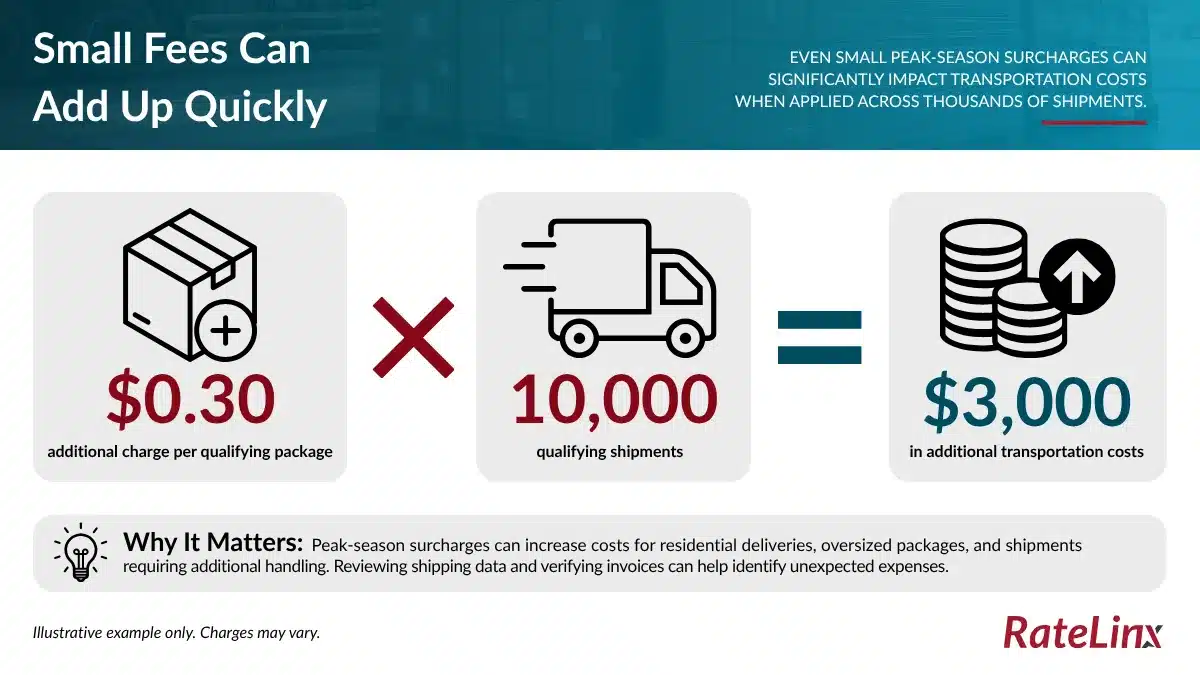
While individual surcharges may appear small, their impact can increase significantly across high shipment volumes.
For example, a $0.30 increase per package across 10,000 qualifying shipments would add $3,000 in transportation expenses during the higher-rate period.
For businesses shipping a mix of residential, oversized, and expedited packages, understanding the combined effect of these charges is important when evaluating total transportation spend.
How Can Shippers Manage Peak Season Shipping Costs?
With seasonal charges already underway, businesses should focus on three areas:
- Review shipping invoices. Verify surcharge amounts, effective dates, and applicability against published carrier rates and contracted agreements.
- Analyze shipment characteristics. Identify which services, package dimensions, and delivery types are contributing to higher transportation costs.
- Monitor total shipping spend. Compare actual transportation expenses against expected costs to identify discrepancies and opportunities for improvement.
Gain Greater Control Over Transportation Costs
Peak-season surcharges highlight the importance of understanding exactly what you’re paying for parcel shipping. With changing carrier rates, additional fees, and varying contract terms, having visibility into transportation expenses can help businesses identify billing discrepancies and better manage costs.
RateLinx’s Parcel Match Pay solution helps businesses improve visibility into parcel shipping expenses, identify potential billing discrepancies, and gain greater control over transportation costs.
Contact RateLinx to learn how we can help you better understand your parcel shipping expenses.